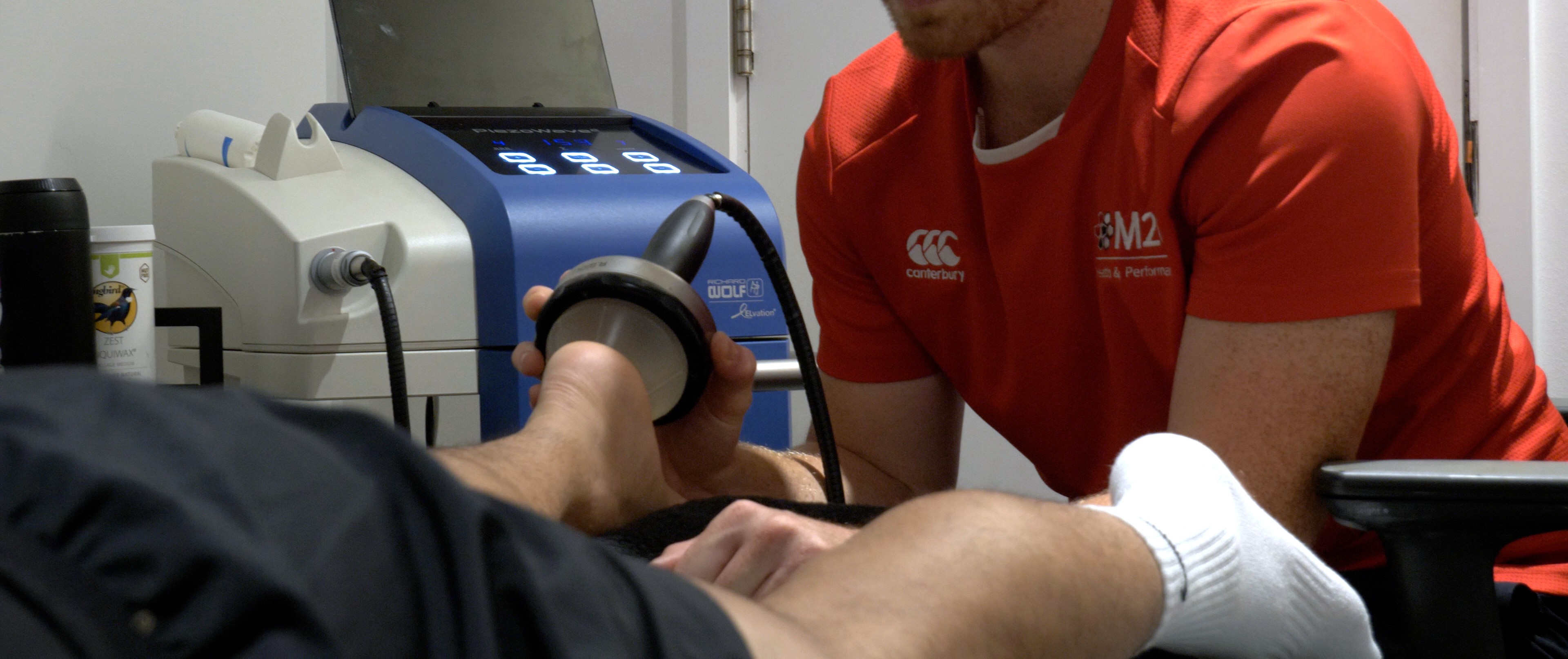
Shockwave therapy has become increasingly popular in physiotherapy, sports injury treatment, and rehabilitation, especially for stubborn tendon problems that have not settled with rest, massage, stretching, or basic exercise alone.
But not all shockwave therapy is the same.
Two terms you may come across are radial shockwave therapy and focused shockwave therapy. They sound similar, and both use acoustic energy to stimulate a response in injured or irritated tissue, but they behave differently in the body. Understanding the difference can help you make a more informed decision about your treatment, especially if you are dealing with a long-standing tendon injury, plantar fasciitis, tennis elbow, Achilles pain, patellar tendinopathy, or a similar condition.
At M20 Health & Performance, shockwave therapy is not used as a stand-alone “quick fix”. It is used as part of a wider rehabilitation plan that includes assessment, progressive mechanical loading, strength work, movement retraining, and a clear return-to-activity strategy.
Shockwave therapy, also known as extracorporeal shockwave therapy, is a non-invasive treatment that delivers acoustic waves through the skin into the affected area. These waves create mechanical stimulation within the tissue, which may help reduce pain, improve local tissue response, and support the body’s natural healing processes.
It is often used for persistent tendon and soft tissue conditions, particularly when symptoms have been present for several months and have not fully responded to standard conservative treatment.
Shockwave therapy is commonly used for conditions such as:
The goal is not simply to “blast away pain”. The goal is to create a window where pain may reduce enough for the right rehabilitation work to become more effective.
Radial shockwave therapy disperses energy outwards from the treatment head. The highest pressure is usually closer to the skin surface, and the energy spreads as it travels through the tissue.
This makes radial shockwave useful for treating larger or more superficial areas. It is often used where the painful region is relatively broad, or where the therapist wants to stimulate a wider section of tissue.
Radial shockwave is commonly found in many physiotherapy clinics because the technology is more widely available and generally less expensive to deliver. It can still be effective, but it does not target depth in the same way as focused shockwave.
Focused shockwave therapy works differently. Instead of spreading energy broadly, the acoustic waves are concentrated at a specific depth and focal point within the tissue.
This allows the clinician to target deeper structures with greater precision. For certain conditions, especially where the irritated tissue sits deeper or where a more localised treatment effect is required, focused shockwave may be more appropriate.
This is one of the key differences: radial shockwave spreads; focused shockwave concentrates.
That does not automatically mean focused shockwave is “better” for every patient. The right option depends on the condition, the tissue involved, the depth of the problem, your symptoms, your goals, and how your body responds to treatment.
The honest answer is: it depends.
Focused and radial shockwave therapy are both used in musculoskeletal care, and research suggests both can be safe options for treating a range of tendon-related conditions. A recent systematic review comparing radial and focused shockwave therapy found no clear overall superiority of one over the other across all tendinopathies, although focused shockwave may have some advantages in certain pain outcomes. The evidence is still developing, and treatment protocols vary.
That matters because good treatment is not about choosing the most advanced-sounding device. It is about matching the right tool to the right person, at the right stage of rehab.
For some patients, radial shockwave may be suitable. For others, focused shockwave may offer a more targeted option. The clinical reasoning behind the choice matters more than the label.
This is the part many clinics do not explain clearly enough.
Shockwave therapy can be a powerful part of a rehabilitation programme, but it is not a magic cure. If you have a tendon problem, the tissue usually needs to rebuild tolerance to load. That means the tendon, muscle, and surrounding system need to gradually become stronger and more capable again.
For most tendinopathies, the long-term solution is not just pain relief. It is improving the tissue’s ability to handle the demands you place on it, whether that is running, lifting, jumping, walking, working, or playing sport.
That is where mechanical loading comes in.
Mechanical loading means applying controlled stress to the tissue through specific exercises. This might include isometric holds, slow resistance training, eccentric loading, heavy slow resistance work, plyometrics, or sport-specific drills depending on your condition and stage of recovery.
The right loading programme helps restore strength, capacity, and confidence. Without it, pain may settle temporarily but return when you go back to the activity that caused the problem in the first place.
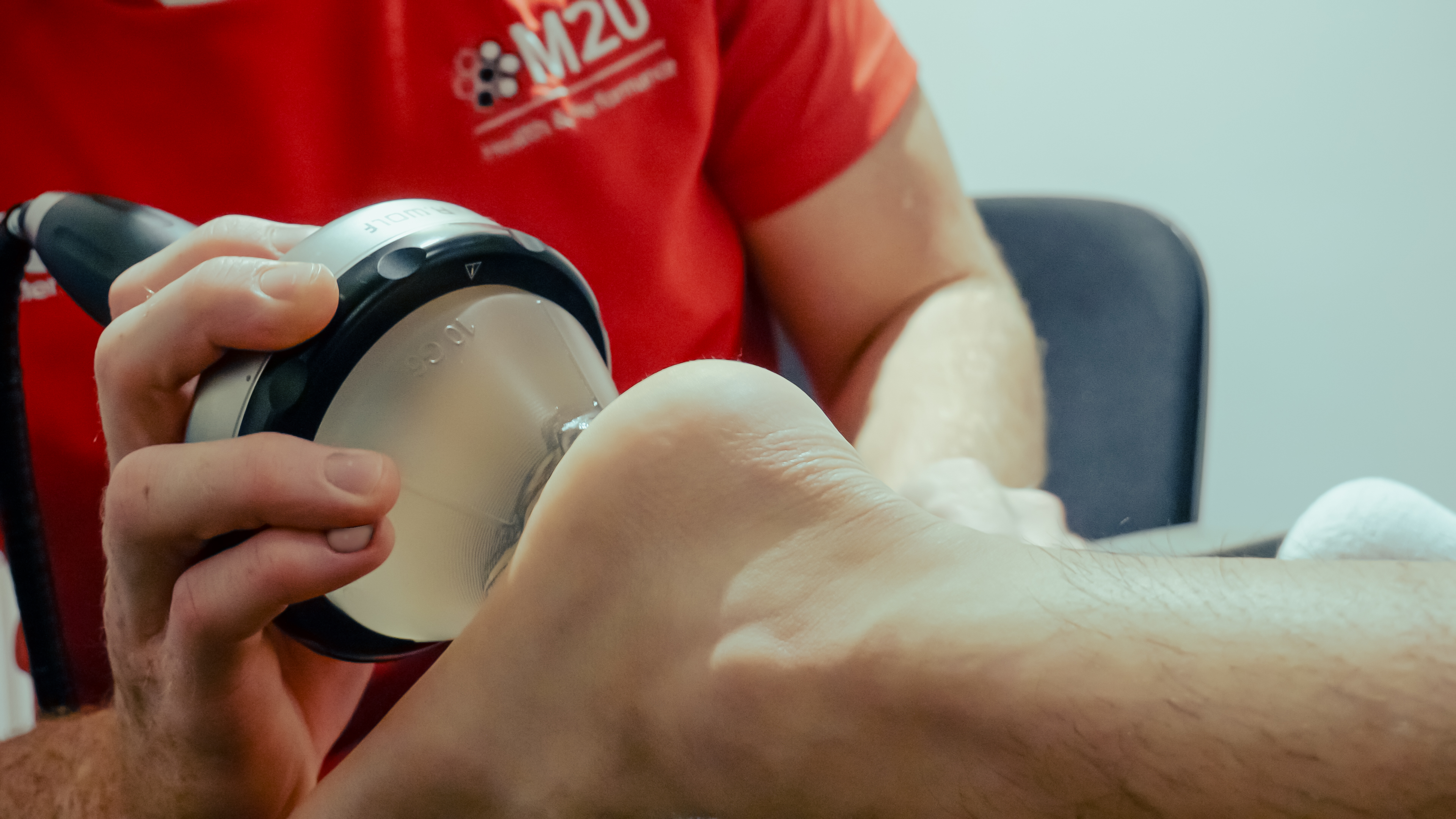
Shockwave therapy may help by reducing pain sensitivity and stimulating a local tissue response. This can make it easier to begin or progress rehab exercises that were previously too uncomfortable.
For example, someone with Achilles tendinopathy may struggle to load the calf properly because every step or heel raise hurts. Shockwave may help reduce pain enough to start building the tendon’s capacity again through a progressive strengthening programme.
Someone with tennis elbow may have pain gripping, lifting, or training. Shockwave may help calm symptoms, but the long-term improvement usually comes from gradually rebuilding forearm, wrist, shoulder, and grip capacity.
This is why shockwave therapy should be seen as an accelerator or support tool, not the whole solution.
A proper rehabilitation programme should usually include:
Shockwave therapy can sit inside this plan, but it should not replace it.
Shockwave therapy may be worth considering if you have had persistent tendon or soft tissue pain for several weeks or months, especially if symptoms are stopping you from training, working, walking comfortably, or progressing your rehab.
It may also be useful when pain is limiting your ability to load the tissue properly. In that case, shockwave can help create a better environment for the strengthening work to take effect.
However, it is not suitable for everyone. A clinician should assess your medical history, symptoms, injury stage, and treatment goals before recommending it.
At M20 Health & Performance, shockwave therapy is used with a performance and rehabilitation mindset. The aim is not just to make the painful area feel better for a few days. The aim is to help you recover properly, rebuild capacity, and return to the activities that matter to you.
That means combining the right technology with the right plan.
Focused shockwave therapy may help target specific tissue more precisely, while rehabilitation builds the strength and resilience needed for long-term results. Together, they can be a valuable combination, but only when applied with proper clinical reasoning.
Radial and focused shockwave therapy are both forms of shockwave treatment, but they are not identical. Radial shockwave spreads energy over a broader, more superficial area. Focused shockwave concentrates energy at a specific depth, allowing for more precise targeting.
The best choice depends on the individual, the condition, and the wider rehabilitation strategy.
Most importantly, shockwave therapy should not be viewed as a stand-alone cure. For lasting recovery, it needs to be combined with progressive mechanical loading, strength work, and a structured rehabilitation plan.
If you are dealing with a stubborn tendon injury or ongoing pain that is not improving, M20 Health & Performance can assess your condition and help you understand whether focused shockwave therapy could form part of your recovery plan.
Ready to take the next step in your recovery? Book a consultation at one of our clinics and let our team assess whether focused shockwave therapy could be the right fit for your rehabilitation plan.